
Protecting The Property Of The Mind
Who Owns What AI Helps You Create?
The Bestseller
Overnight Method
Sell the Story Before
You Tell the Story
Your ideas can build a brand, launch a business, transform an industry, and create a legacy.
But if ownership is unclear, the value you create can end up in someone else’s hands.
How to Turn Your Unfinished Book Into a Bestseller-Ready Pre-Order in 24 Hours or Less Without finishing the manuscript first, building a huge audience, or trying to figure out Amazon KDP alone.
Protecting The Property Of The Mind
Who Owns What AI Helps You Create?
The Bestseller
Overnight Method
Sell the Story Before
You Tell the Story
Your ideas can build a brand, launch a business, transform an industry, and create a legacy.
But if ownership is unclear, the value you create can end up in someone else’s hands.
How to Turn Your Unfinished Book Into a Bestseller-Ready Pre-Order in 24 Hours or Less Without finishing the manuscript first, building a huge audience, or trying to figure out Amazon KDP alone.
AS FEATURED IN:
Dr. Fred Jones
guides creators, founders, authors, entrepreneurs, and AI-powered businesses in identifying, documenting, protecting, and commercializing the ideas, brands, content, systems, and technology they create. Because creating something is not the same as owning it.
U.S. Supreme Court Attorney | Former Business Law Professor |
AI + Intellectual Property Strategist

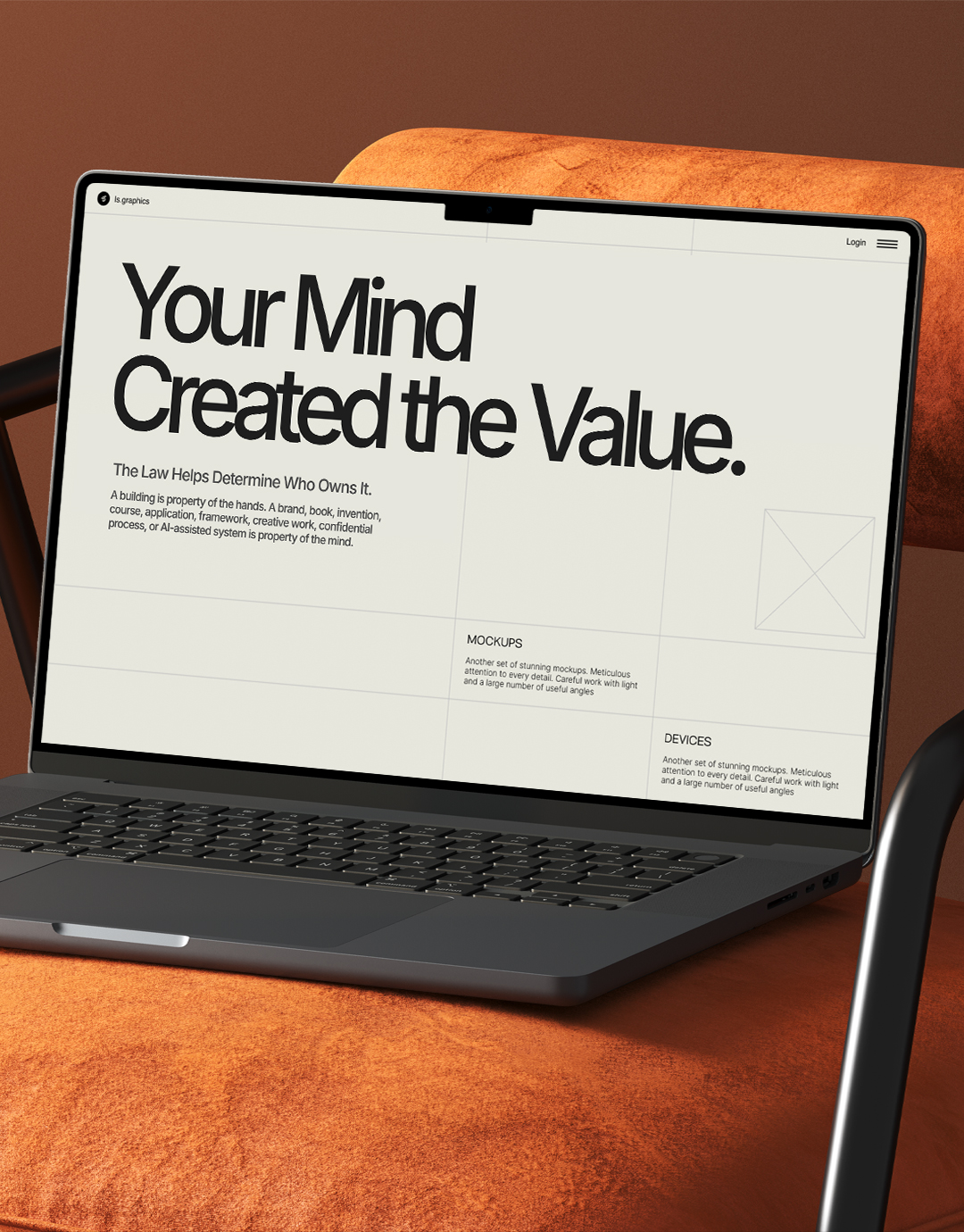
Your Mind Created the Value.
The Law Helps Determine Who Owns It.
A building is property of the hands. A brand, book, invention, creative work, business system, or AI-assisted innovation is property of the mind.
Intellectual property law helps determine who owns it, who may use it, and who may profit from it.
An idea alone may not be protectable. But when it becomes an original work, distinctive brand, qualifying invention, or protected business asset, it may become valuable intellectual property.
Ownership shouldn't be an afterthought—it should be part of the creation process.
Frame It. Name It. Claim It.™
Your Mind Created
the Value.
The Law Helps Determine
Who Owns It.
A building is property of the hands. A brand, book, invention, creative work, business system, or AI-assisted innovation is property of the mind.
Intellectual property law helps determine who owns it, who may use it, and who may profit from it.
An idea alone may not be protectable. But when it becomes an original work, distinctive brand, qualifying invention, or protected business asset, it may become valuable intellectual property.
Ownership shouldn't be an afterthought—it should be part of the creation process.
Frame It. Name It. Claim It.™
History Remembers the Invention.
Too Often, It Forgets the Inventor.
For generations, Black creators and inventors produced ideas that changed industries while legal, economic, and social systems denied them recognition, control, and compensation.
Their stories are not stories of insufficient brilliance.
They are stories about what happens when creation exists without legally recognized ownership.
For generations, Black creators and inventors produced ideas that changed industries while legal, economic, and social systems denied them recognition, control, and compensation.
Their stories are not stories of insufficient brilliance.
They are stories about what happens when creation exists without legally recognized ownership.
Benjamin Montgomery
Born enslaved, Benjamin Montgomery developed an improved propeller designed to help steamboats navigate shallow water. The patent system of his time denied enslaved people the legal standing necessary to receive patent protection.
He created the value. The law refused to recognize his ownership.
Lewis Temple
Lewis Temple, a Black blacksmith and former enslaved man, developed the Temple Toggle Iron, a harpoon innovation that transformed the whaling industry.
Temple never patented the invention. The design was widely copied and used throughout the industry. The Smithsonian reports that he died unrecognized and in debt. Smithsonian National Museum of American History
The industry benefited. The inventor did not receive the full benefit of what he created.
Ned, the Enslaved Inventor
An enslaved artisan known as Ned developed an innovative double cotton scraper. The legal system would not recognize Ned as a person entitled to patent ownership. It also rejected the attempt of his enslaver to claim the invention because the enslaver was not the true inventor.
The invention existed.
The inventor’s legal ownership did not.
The Smithsonian’s historical research documents how enslaved inventors were denied access to patent protection, while free Black inventors faced structural, financial, and racial barriers. Smithsonian Lemelson Center
Thomas Jennings
In contrast, Thomas Jennings became the first known Black inventor to receive a United States patent when he patented his dry-scouring method in 1821.
The difference was not intelligence.
The difference was access to legally recognized ownership. USPTO
Do Not Let Your Work Become Valuable to Everyone but You.
Create it.
Document it.
Protect it.
Own it.
Legal Strategy for What You Create, Build, and Own
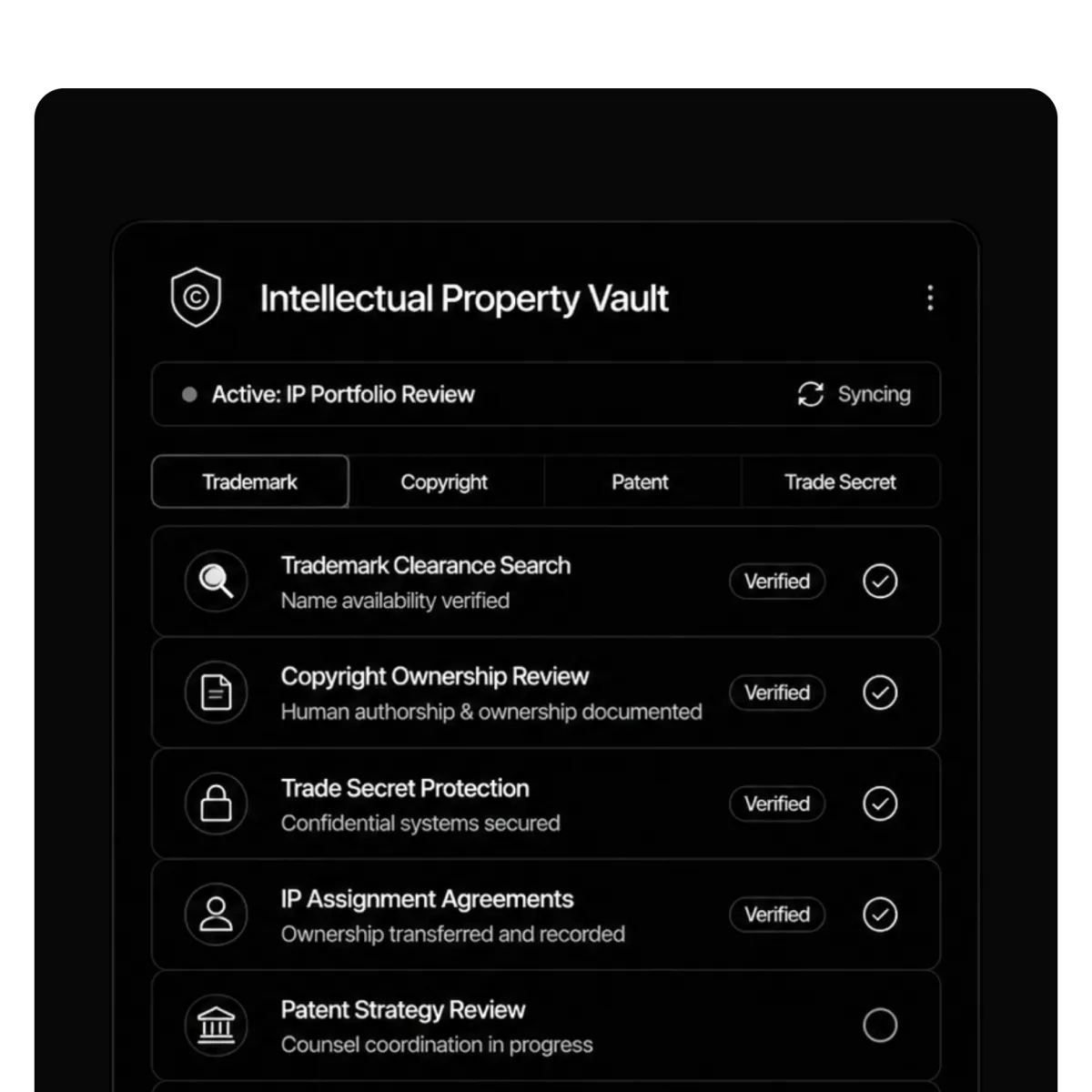
Intellectual Property
But, can’t I just use A.I. to write my book?
Protect the names, original works, inventions, systems, and confidential knowledge that distinguish your work.
Trademark clearance and registration
Copyright registration and ownership
Trade secret protection
Intellectual property assignments
Patent strategy and patent-counsel coordination
Intellectual property due diligence
AI + Technology
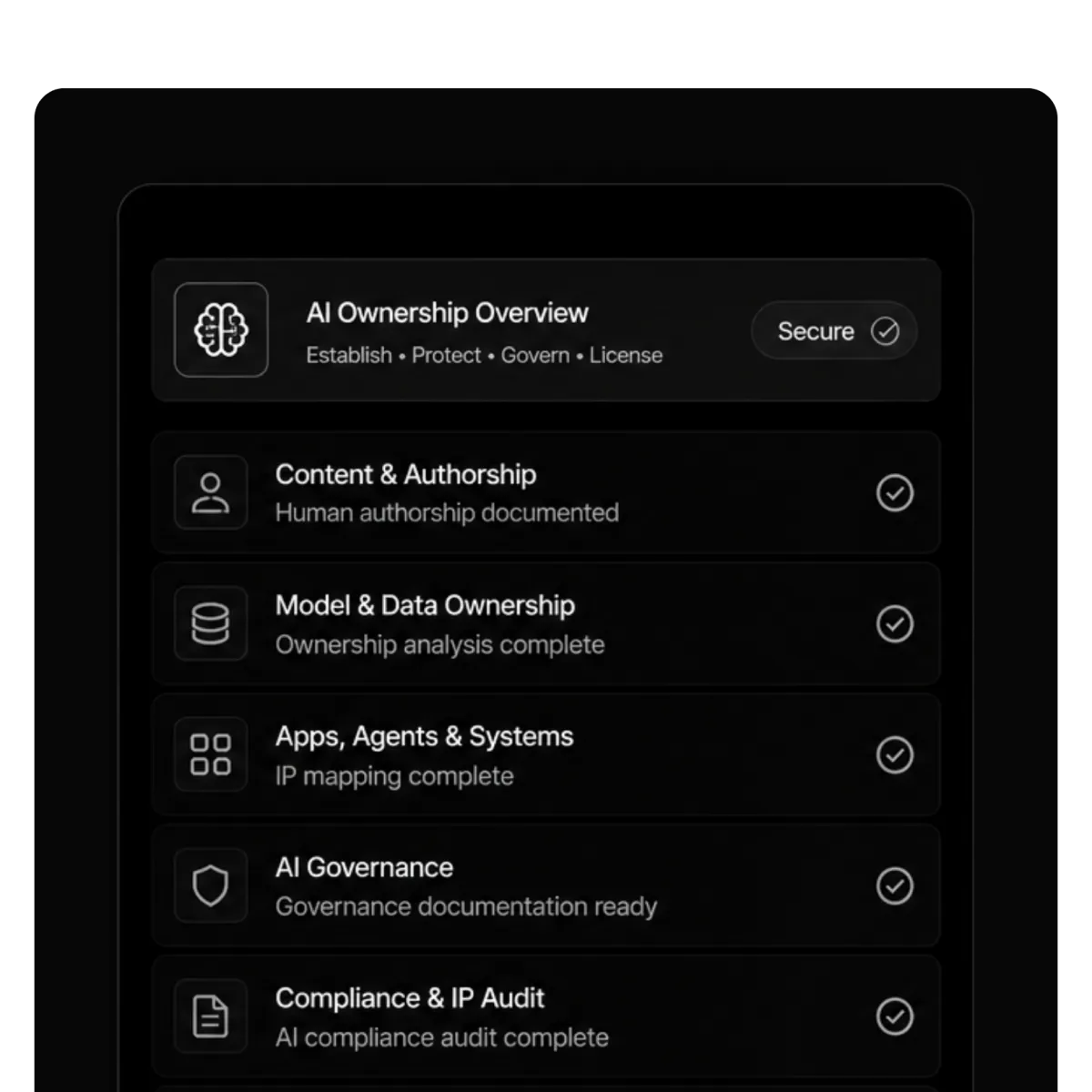
Establish ownership, authorship, governance, and licensing for AI-assisted content, apps, agents, data, models, and business systems.
AI ownership analysis
AI compliance and intellectual property audits
Model and data ownership analysis
App and agent intellectual property mapping
AI governance documentation
Human authorship documentation
AI platform and terms-of-use analysis
But, can’t I just use A.I. to write my book?
Business + Startups
But, can’t I just use A.I. to write my book?
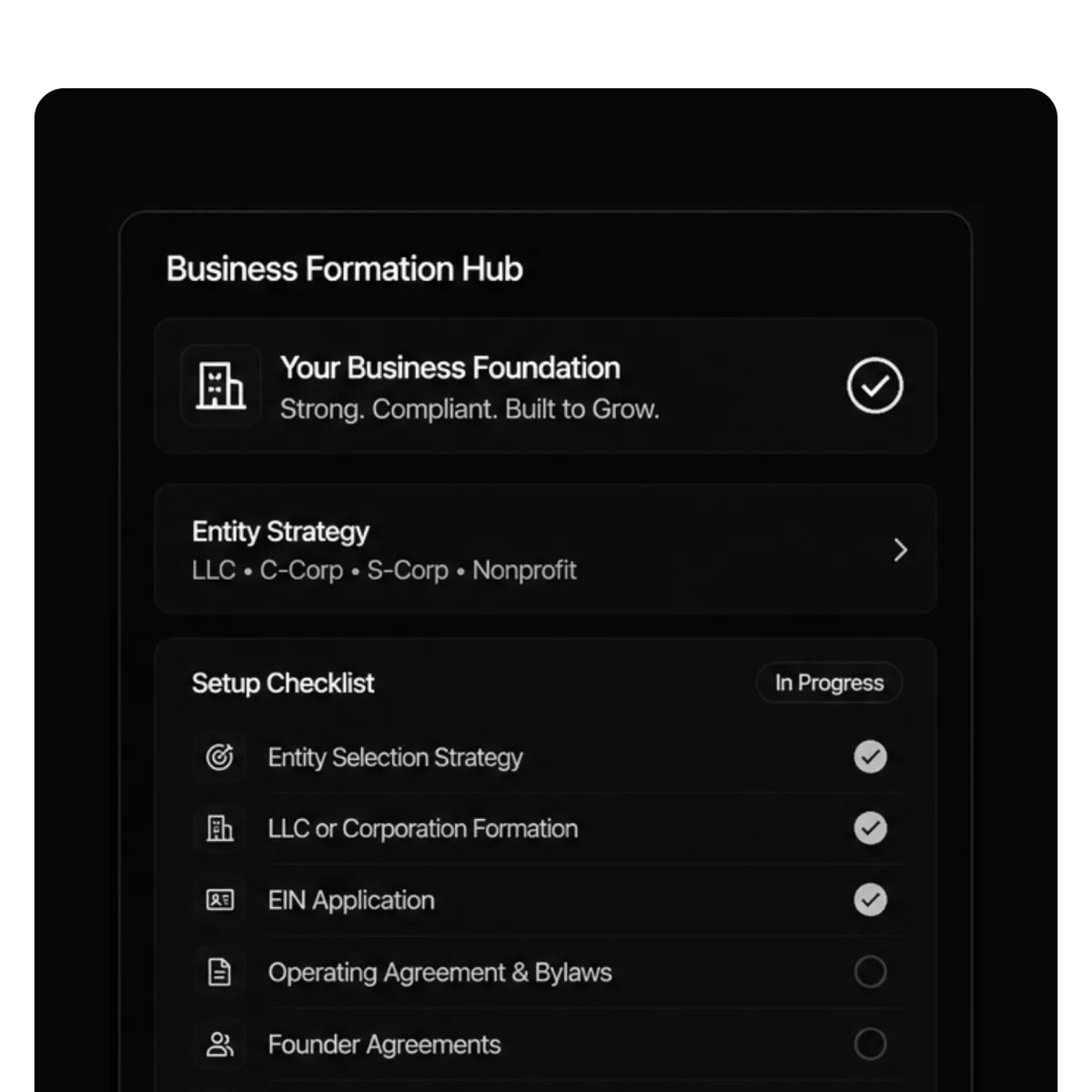
Build the business structure, founder relationships, operating documents, and ownership records behind the idea.
Entity-selection strategy
LLC and corporation formation
EIN application assistance
Operating agreements and bylaws
Founder agreements
Intellectual property assignments
Business restructuring
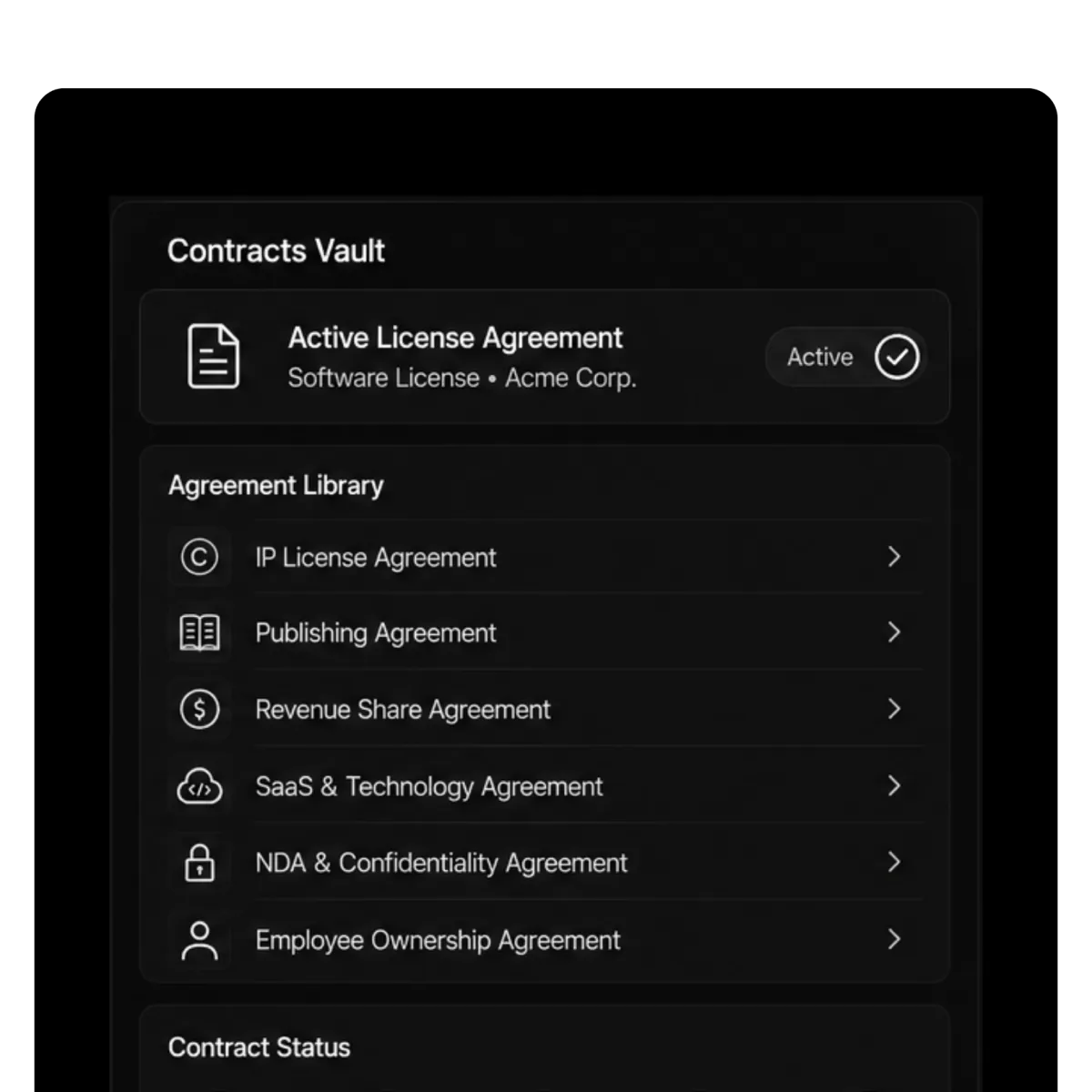
Contracts + Licensing
Control who may use your intellectual property, under what conditions, and for whose financial benefit.
Intellectual property licensing
Publishing and content agreements
Royalty and revenue-sharing agreements
AI, SaaS, app, and technology agreements
Confidentiality and trade secret agreements
Employee and contractor ownership agreements
But, can’t I just use A.I. to write my book?
Legal Strategy for What You Create, Build, and Own
Legal Strategy for What You Create, Build, and Own
Intellectual Property
Intellectual Property
Protect the names, original works, inventions, systems, and confidential knowledge that distinguish your work.
Trademark clearance and registration
Copyright registration and ownership
Trade secret protection
Intellectual property assignments
Patent strategy and patent-counsel coordination
Intellectual property due diligence
AI + Technology
AI + Technology
Establish ownership, authorship, governance, and licensing for AI-assisted content, apps, agents, data, models, and business systems.
AI ownership analysis
AI compliance and intellectual property audits
Model and data ownership analysis
App and agent intellectual property mapping
AI governance documentation
Human authorship documentation
AI platform and terms-of-use analysis
Business + Startups
AI + Technology
Build the business structure, founder relationships, operating documents, and ownership records behind the idea.
Entity-selection strategy
LLC and corporation formation
EIN application assistance
Operating agreements and bylaws
Founder agreements
Intellectual property assignments
Business restructuring
Contracts + Licensing
AI + Technology
Control who may use your intellectual property, under what conditions, and for whose financial benefit.
Intellectual property licensing
Publishing and content agreements
Royalty and revenue-sharing agreements
AI, SaaS, app, and technology agreements
Confidentiality and trade secret agreements
Employee and contractor ownership agreements
Do You Own What AI Helped You Create?
AI can help you write the book, name the brand, develop the course, generate the content, build the application, and automate the business.
But AI cannot guarantee that you own the result.
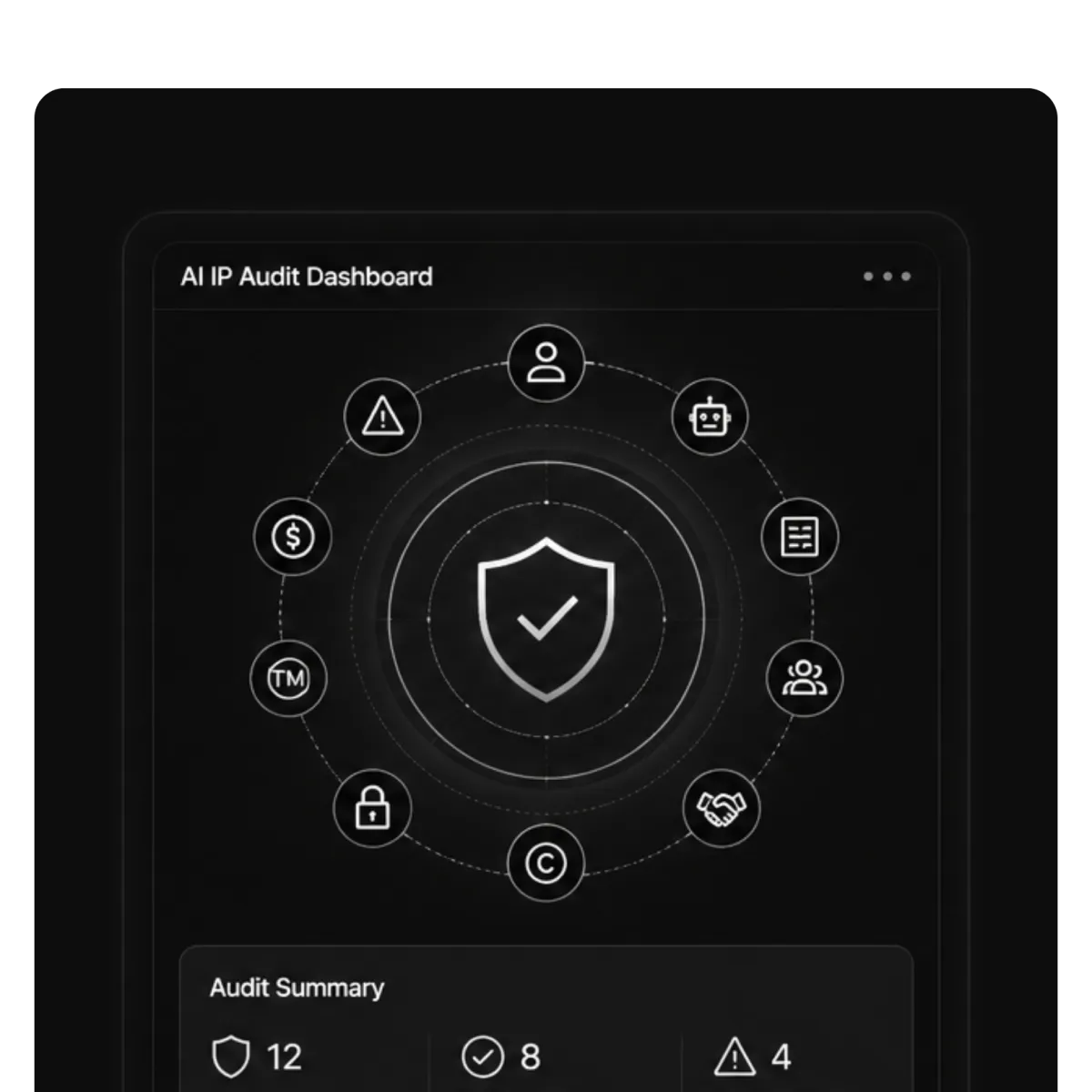
An AI + IP Ownership Audit examines the people, platforms, agreements, data, prompts, processes, and technology involved in creating your intellectual property.
Your Audit May Examine
Who contributed the human authorship
Which AI platforms were used
What the platform terms permit
Who owns the prompts, inputs, and outputs
Whether employees or contractors contributed
Whether ownership assignments exist
What may qualify for copyright or trademark protection
What should be maintained as a trade secret
What can be licensed or commercialized
Where ownership gaps may place the business at risk
But, can’t I just use A.I. to write my book?
Your Audit May Examine
Your Audit May Examine
Who contributed the human authorship
Which AI platforms were used
What the platform terms permit
Who owns the prompts, inputs, and outputs
Whether employees or contractors contributed
Whether ownership assignments exist
What may qualify for copyright or trademark protection
What should be maintained as a trade secret
What can be licensed or commercialized
Where ownership gaps may place the business at risk
The goal is to identify:
What you own. What may be exposed. What needs to be documented. What should be protected.
I Have Been Thinking About Ownership Since 1991.
In 1991, Professor Carey deBessonet introduced me to the term “intellectual property.”
That moment changed the way I understood property.
I realized that some of the world’s most valuable property is not created by the hands. It is created by the mind.
That understanding has shaped my work as an attorney, professor, author, publisher, entrepreneur, and intellectual property strategist.
I have seen a book become a brand. I have seen a brand become a business. I have seen a framework become a proprietary system. I have also seen people create valuable work without establishing who owned it.
Today, artificial intelligence has made creation faster than ever. It has also made ownership more complicated.
My passion is ensuring that creators do not become digital sharecroppers, producing valuable intellectual property on platforms, inside businesses, and through agreements they do not fully understand or control.
Your story deserves to be published, protected, and paid.
Your ideas deserve an ownership strategy.

Dr. Fred Jones
U.S. Supreme Court Attorney
AI + Intellectual Property Strategist
I Have Been Thinking About Ownership Since 1991.
In 1991, Professor Carey deBessonet introduced me to the term “intellectual property.”